"Cowboy" Bill Watts, Mid-South Wrestling Founder and WWE Hall of Famer, Dies at 87

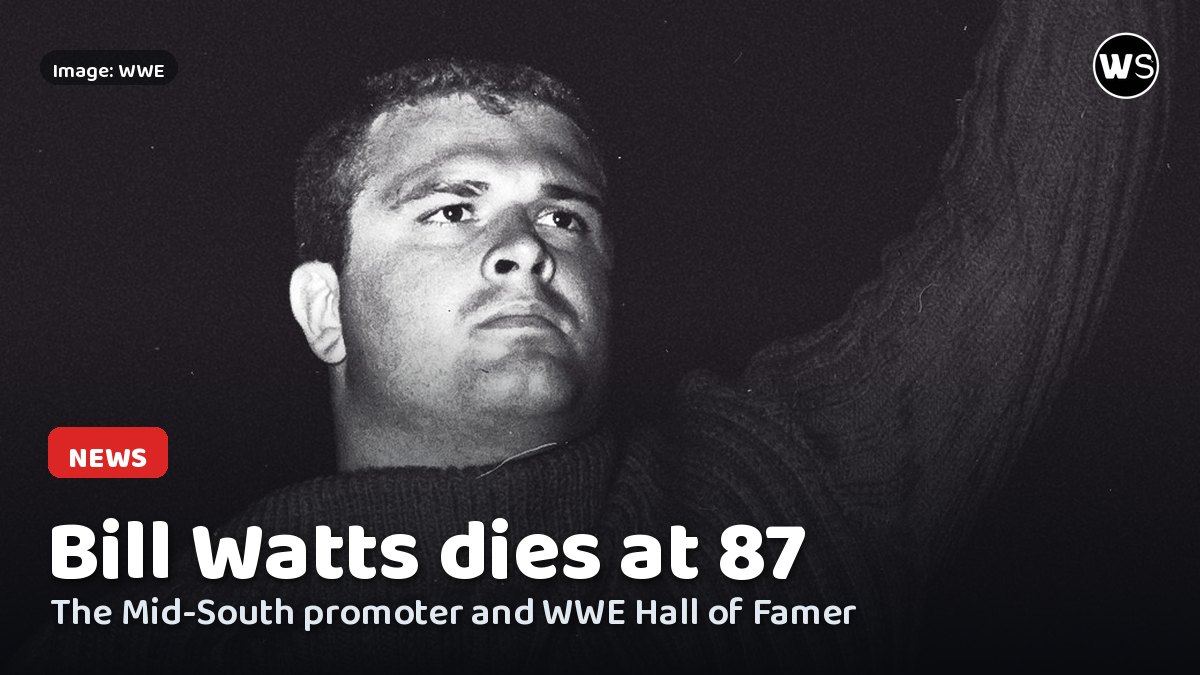
"Cowboy" Bill Watts has died at the age of 87. Veteran wrestling journalist Bill Apter shared the news on Tuesday, November 17, reading out a message from Watts' son, Erik, who said his father had passed away that day. No cause of death has been given.
WWE followed with a statement on its website, saying it was "saddened to learn" of his passing and sending its condolences to his family, friends and fans. Watts was inducted into the WWE Hall of Fame in 2009.
To younger fans the name might not mean much. But a lot of what you watch on Raw and SmackDown every week, a story that moves forward from one episode to the next, wrestlers you get to know over months, goes back to the way Watts ran his television in the 1980s.
From Oklahoma football to Bruno Sammartino
William F. Watts Jr. was born on May 5, 1939, in Oklahoma City. He played football at the University of Oklahoma and had a short stint in pro football with the Houston Oilers, then of the American Football League, before wrestling took over.
He started in the early 1960s, and according to WWE it was "Wild" Red Berry who recommended him to Vincent J. McMahon, the father of Vince McMahon. As a big, rough villain, Watts challenged Bruno Sammartino for the WWWF Championship in front of packed houses. He never won that title, but he did hold the WWWF United States Tag Team Championship with Gorilla Monsoon, and he challenged for the NWA and AWA world titles too. He also wrestled in Japan for All Japan Pro Wrestling.
Mid-South Wrestling and the UWF
Watts is remembered less for his matches than for what he built behind the scenes. From 1979 to 1987 he ran Mid-South Wrestling out of the Louisiana and Oklahoma area, and in 1986 he renamed it the Universal Wrestling Federation as he tried to grow it into a national company.
The list of names who came through his territory is long. WWE's statement credits him with developing future Hall of Famers "Hacksaw" Jim Duggan, Ted DiBiase, The Fabulous Freebirds, Ultimate Warrior and Sting. The Junkyard Dog became the biggest star in the territory under Watts, and "Dr. Death" Steve Williams was another of his projects.
The national push did not work. The UWF lost a lot of money in the mid-1980s oil bust that hit its home states hard, and Watts sold the company to Jim Crockett Promotions in 1987. Crockett's promotion later became World Championship Wrestling.
Why his television still matters
This is the part of the story we think deserves the most attention. In the territory days, a lot of wrestling TV was a string of squash matches built to sell tickets for the next house show. Mid-South felt different. Feuds built week to week, the matches had stakes, and the show ended with a reason to tune in next Saturday.






WWE's own statement says Watts helped make televised wrestling an episodic product instead of something built around rare special events. That is the backbone of every weekly show WWE makes today. When a Raw ends on an angle that builds to a match three weeks later, that is the Mid-South model.
His shows also looked like a sport. Watts wanted wrestling to be believable and physical, with clean finishes when they mattered and heels who were genuinely hated. It was not always pretty, but it was easy to care about, which is the hardest thing for any wrestling show to get right.
It is also worth saying that his biggest star was the Junkyard Dog. Making a Black wrestler the top babyface of a Deep South territory in the early 1980s was a big call at the time, and it drew huge crowds.
WCW, WWF and a complicated legacy
Watts came back to the business in 1992 as Executive Vice President of WCW. His time there was short and controversial. He cut costs, brought in rules that were unpopular with the roster, and pushed the product back toward the old-school style he liked.
He left in 1993 after comments from an interview he gave before joining WCW became public. In it, he defended a business owner's right to refuse service based on race. The remarks drew strong criticism, including from baseball great Hank Aaron, then an executive at Turner Broadcasting, WCW's parent company. In 1995, he had a short stint as a booker in the WWF.
We don't think an honest look at his career can skip that chapter. Watts was an important figure in how wrestling is presented on TV, and those comments were wrong. Both things are part of his story, and fans who look him up will find both.
The Hall of Fame and his family
WWE inducted Watts into its Hall of Fame on April 4, 2009, the weekend of WrestleMania 25 in Houston. He also told his own story in the 2006 autobiography "The Cowboy and the Cross: The Bill Watts Story", written with Scott Williams.
Wrestling ran in the family. His son Erik Watts wrestled for WCW, the WWF and TNA, and he was the one who shared the news of his father's death with Apter.
What his passing means today
Most of the people who worked for Watts are retired now, and some, like the Junkyard Dog and Steve Williams, passed away years ago. With Watts gone, one of the last big promoters of the territory era is gone too.
His influence is still easy to see. The weekly shows that build to Survivor Series: WarGames in Houston on November 28 work the way Watts wanted wrestling TV to work, with stories that carry over from week to week. Plenty of promoters had more money and bigger arenas. Not many changed how the shows themselves are made.
WrestleSeek sends its condolences to the Watts family and to everyone who worked with him.